


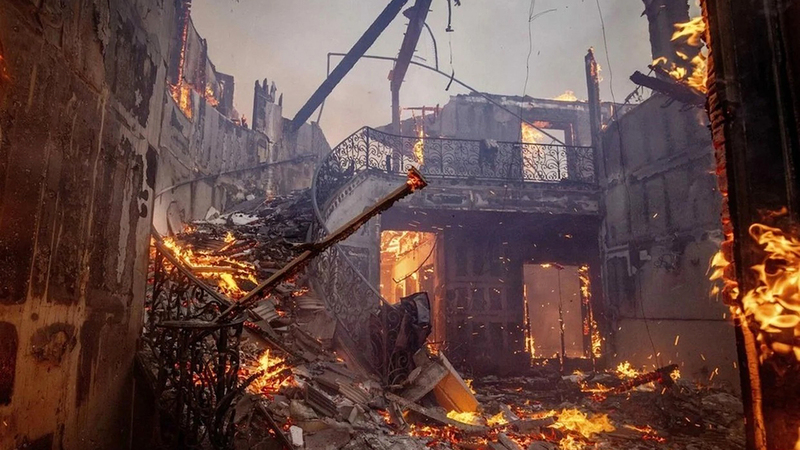
The year 2025 witnessed a surge in climate-related disasters, inflicting devastating losses on communities worldwide. From catastrophic floods to unprecedented wildfires, the scale of destruction and human suffering was immense, highlighting the urgent need for global action on الكوارث المناخية (climate disasters). A recent study reveals the staggering economic and human cost of these events, painting a grim picture of a planet increasingly vulnerable to extreme weather.
تزايد وتيرة وشدة الكوارث المناخية (Increasing Frequency and Severity of Climate Disasters)
The report, compiled by Christian Aid, details how the most impactful ten climate disasters of 2025 resulted in over $120 billion in insured losses. However, this figure represents only a fraction of the true cost. The analysis deliberately focuses on insured losses, omitting the immeasurable value of lost lives, displacement, and the long-term socio-economic consequences experienced by affected populations. This omission is crucial, as the human cost often far outweighs the financial one, particularly in developing nations.
Professor Joanna Haigh, a leading expert in atmospheric physics and weather at Imperial College London, emphasizes that these events are not simply “natural disasters.” She asserts, “The destructive events are increasing in their frequency and intensity due to the human-made climate crisis.” The world is paying a heavy price for a problem we already know how to solve, a price measured in lives and livelihoods.
آسيا تتحمل العبء الأكبر (Asia Bears the Brunt)
South and Southeast Asia were particularly hard hit in the autumn of 2025. Devastating cyclones and floods claimed the lives of 1,750 people and caused approximately $25 billion in damage. Meanwhile, the wildfires in California resulted in around 400 fatalities and a staggering $60 billion in losses.
However, the human toll was most acutely felt in Asia. The destructive floods in China, displacing thousands from their homes, ranked as the third most costly climate disaster, with damages reaching $12 billion and claiming 30 lives. Pakistan and India were also severely affected, with floods causing nearly 1,860 deaths and $6 billion in damage, impacting around seven million people in Pakistan alone. These figures underscore the disproportionate impact of تغير المناخ (climate change) on vulnerable populations.
الأثر العالمي للكوارث المناخية (The Global Impact of Climate Disasters)
The impact of these disasters wasn’t limited to Asia. The report highlights a global pattern of escalating extreme weather events. Unprecedented wildfires ravaged the Iberian Peninsula, while Canada battled severe droughts. Scotland experienced record-breaking heatwaves, demonstrating that no region is immune to the effects of a changing climate.
The Philippines also faced a series of cyclones, forcing 1.4 million people to evacuate and causing $5 billion in damage. In the Democratic Republic of Congo and Nigeria, devastating floods in April and May respectively, led to the tragic loss of 700 lives. Even Iran is facing a looming crisis, with drought threatening to displace the 10 million residents of its capital, Tehran. These events collectively demonstrate the widespread and interconnected nature of الأحداث المناخية المتطرفة (extreme weather events).
التعويضات والدعم المالي غير كافية (Compensation and Financial Support are Insufficient)
During the COP30 climate summit in Belém, Brazil, wealthy nations pledged to triple their funding for adaptation in poorer countries, aiming to reach $120 billion by 2035. While a step in the right direction, experts warn that this amount is woefully inadequate to address the growing needs of developing nations.
Patrick Watt, CEO of Christian Aid, points out that the bill for climate disaster damage will only continue to rise. He emphasizes, “These climate disasters are warning signs of what’s to come if we don’t urgently tackle the carbon emissions crisis. They also highlight the urgent need for adaptation, particularly in the Global South, where resources are scarce and people are more vulnerable to climate shocks.”
الحاجة إلى خريطة طريق للتخلص من الانبعاثات (The Need for a Roadmap to Eliminate Emissions)
COP30 was intended as a starting point for developing a roadmap to phase out harmful emissions. This work will continue this year, led by Brazil, with a special conference on emissions reduction scheduled to be held in Colombia in April. Over 80 countries supporting the effort are expected to attend, signaling a growing global commitment to addressing the root causes of these devastating الكوارث الطبيعية (natural disasters).
However, commitment must translate into concrete action. The escalating frequency and intensity of climate disasters serve as a stark reminder that the time for complacency is over. The world must accelerate its efforts to reduce carbon emissions, invest in adaptation measures, and provide adequate support to those most vulnerable to the impacts of a changing climate. Ignoring the reality will only lead to greater suffering and economic losses in the years to come.