


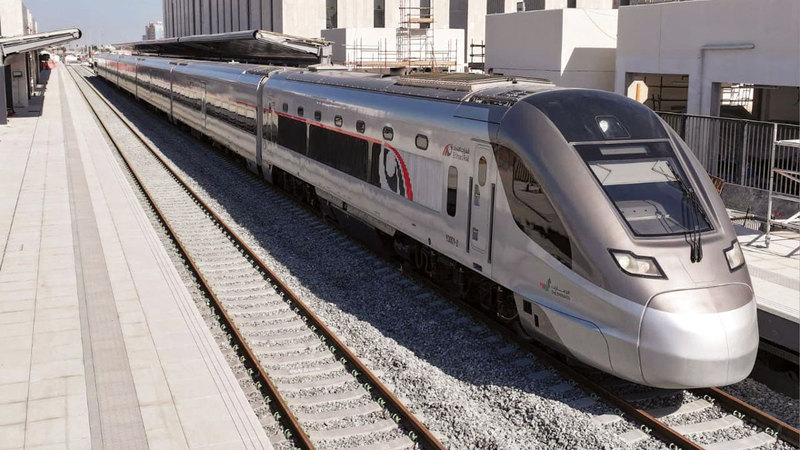
The United Arab Emirates is on the cusp of a transportation revolution with the imminent launch of its national railway network for passenger transport. This ambitious project, spearheaded by Etihad Rail, promises to redefine connectivity and mobility across the nation, offering a modern, efficient, and sustainable travel option. The announcement of the complete network details marks a significant milestone in the UAE’s infrastructure development, poised to benefit citizens, residents, and tourists alike. This article delves into the details of the قطارات الإمارات (UAE trains) project, its benefits, and the timeline for its full operationalization.
A National Network Taking Shape: Details of the Passenger Rail Project
Etihad Rail recently unveiled the comprehensive network plan for the UAE’s passenger railway, a system designed to link 11 key cities and regions with strategically located stations. This initiative represents a fundamental shift in the country’s transportation landscape, moving towards a fully integrated national rail system. The initial phase, announced in early 2025, focused on four primary stations in Abu Dhabi, Dubai, Sharjah, and Fujairah. Now, the company has revealed the locations of the remaining stations, including Al Silaa, Al Dhaid, Madhab, Zayed City, Mezairaa, Al Faya, and Al Marfa, with a phased rollout planned.
This expansion demonstrates a commitment to accessibility and ensuring that the benefits of القطارات الإمارات reach a broad spectrum of the population. The careful selection of station locations, often within vital residential and economic hubs, underscores the project’s focus on convenience and integration with existing urban infrastructure.
Strategic Importance and Economic Impact
According to Eng. Aza Al Suwaidi, VP of Passenger Services at Etihad Rail, the project is a direct realization of the UAE’s leadership’s vision for a comprehensive transport system that supports both the economic and social fabric of the nation. “The launch of passenger services via the national railway network in 2026 translates the vision of our wise leadership in building an integrated transport system that supports the economic and social structure of the country,” she stated.
The passenger rail network is considered a crucial pillar in the UAE’s national transport strategy, bolstering the country’s developmental trajectory and strengthening ties between its emirates. This comes on the heels of the successful operation of the freight train since 2023, showcasing Etihad Rail’s capabilities and laying the groundwork for passenger services. The project isn’t just about transportation; it’s about fostering economic growth, creating job opportunities, and enhancing the overall quality of life. The development of شبكة السكك الحديدية (railway network) is expected to stimulate domestic tourism and establish a new regional benchmark for sustainable, people-centric transportation.
Modern Fleet and Advanced Technology
Etihad Rail is prioritizing passenger comfort and safety by investing in a state-of-the-art fleet of trains. These trains are designed with modern interiors, comfortable and secure seating, individual power outlets, and full Wi-Fi connectivity. The aim is to provide a travel experience that rivals or surpasses air travel in terms of convenience and productivity.
Eng. Mohammed Alshahy, Head of Projects at Etihad Rail, emphasized the meticulous planning and execution of the project. He noted that 10 out of the 13 planned trains have already arrived in the UAE and undergone rigorous testing to meet the highest international standards of quality and safety. Each train can accommodate up to 400 passengers, with the entire fleet projected to transport approximately 10 million passengers annually.
Construction and Development: A Monumental Undertaking
The development of the قطارات الإمارات network has been a massive undertaking, spanning three years of planning, design, and construction. Over 7,000 experts and workers have contributed a total of 24.5 million work hours to bring this vision to life. The project has leveraged both national expertise and best practices from around the world, ensuring a high-quality and reliable infrastructure.
The selection of station locations was done in close coordination with local authorities, ensuring proximity to population centers and alignment with each emirate’s urban planning initiatives. Examples include the location in Mohammed bin Zayed City in Abu Dhabi, Jumeirah Golf Estates in Dubai, and the University City in Sharjah, and Al Hela City in Fujairah.
National Benefits and Sustainable Future
Beyond improved connectivity, the passenger rail network is expected to deliver a wide range of national benefits. These include boosting domestic tourism, supporting economic activity, reducing carbon emissions, strengthening social and economic ties between the emirates, and enhancing the overall quality of life for residents.
The network will offer a reliable and efficient alternative to road travel, alleviating traffic congestion and providing a more relaxed and productive commuting experience. Furthermore, the emphasis on sustainability aligns with the UAE’s commitment to environmental responsibility and its efforts to diversify its energy sources. The project is a long-term national investment in transport and infrastructure, setting a new standard for sustainable mobility in the region. The نقل بالقطار (train transport) system will contribute to a greener future for the UAE.
In conclusion, the launch of the UAE’s national passenger rail network is a transformative project with far-reaching implications. By connecting key cities and regions, providing a comfortable and efficient travel experience, and promoting sustainability, قطارات الإمارات is poised to become a cornerstone of the nation’s infrastructure and a catalyst for economic and social progress. The phased rollout, beginning in 2026, will undoubtedly be a moment of national pride and a significant step towards realizing the UAE’s vision for a connected and prosperous future. Stay tuned for further updates and prepare to experience a new era of travel in the United Arab Emirates.