


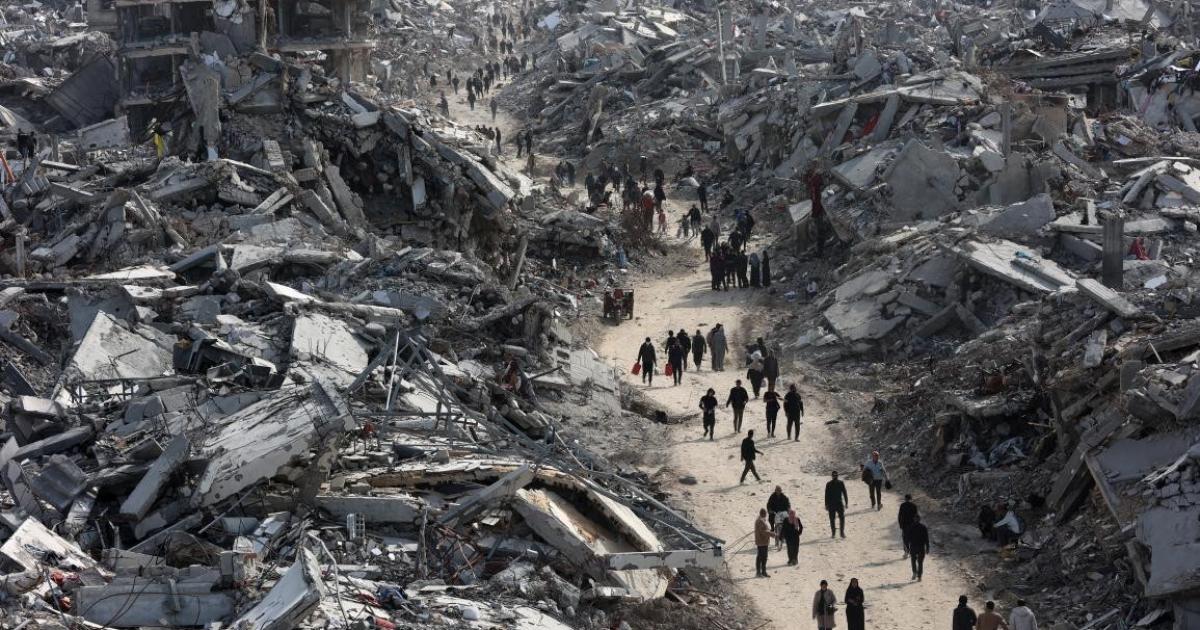
The situation in Gaza remains a critical international concern, with ongoing discussions surrounding its reconstruction following recent conflicts. Despite an agreement between Cairo and Washington on the necessity of activating a plan to rebuild Gaza, the approach this plan will take remains unclear, and no date has been set for a conference to discuss it. This article delves into the complexities of the reconstruction efforts, the differing approaches being considered, and the potential for a unified strategy.
Egyptian-Led Reconstruction Efforts: A Comprehensive Vision
Egypt has been at the forefront of efforts to secure a lasting peace and facilitate the rebuilding of Gaza. President El-Sisi has repeatedly emphasized the importance of holding an international conference dedicated to the reconstruction of the Strip. Initially, late November was considered a potential timeframe, but the conference has been postponed.
According to Egyptian Foreign Ministry Spokesperson Tamim Khallaf, Egypt aims to “launch a comprehensive track regarding the reconstruction of Gaza.” This vision prioritizes a holistic approach, addressing not only the physical damage but also the underlying socio-economic issues contributing to instability. Cairo is actively working with regional and international partners to create a conducive environment for a successful conference focused on “early recovery and reconstruction in the Gaza Strip.”
The Emergence of a US Plan and Diverging Approaches
Alongside the Egyptian initiative, a separate US plan has emerged, appearing to align with certain Israeli proposals. This divergence in approaches has created uncertainty about the future of reconstruction. Jared Kushner, former President Trump’s son-in-law, unveiled a plan focusing on rebuilding areas of Gaza under Israeli military control, envisioning a “New Gaza” with the condition of disarming Hamas. The plan specifically targets Rafah, near the Egyptian border, for initial development.
However, this US-backed “Sunrise Project,” developed with envoy Steve Witkoff, raises significant questions. It proposes a 10-year disarmament process for Hamas, but fails to address the immediate housing needs of the nearly two million displaced Palestinians during the reconstruction period. This has led to concerns that the plan may be more of a negotiating tactic, aimed at securing Israeli concessions while potentially facilitating displacement, a concern Egypt explicitly seeks to avoid.
Egypt’s Priorities: Stability and Preventing Displacement
According to Ahmed Fouad Anwar, a member of the Egyptian Council for Foreign Affairs, Egypt’s primary goal is to “provide greater consensus on making any reconstruction approach, whether through an Egyptian plan or otherwise, within a framework that makes Gaza a suitable place for life without any displacement or threat to Egyptian national security.” He believes Egyptian diplomacy will succeed, mirroring its success in the Sharm el-Sheikh peace conference.
Anwar stresses that Egypt’s priority is providing a lifeline to the Palestinian people, continuing cooperation with partners to generate momentum for reconstruction, regardless of whether it originates from an Egyptian or American plan. The crucial condition, he emphasizes, is ensuring Gaza becomes a habitable place for its residents, not a site for forced relocation or a compromise of Palestinian rights or Egyptian security. This stance underscores Egypt’s commitment to a long-term solution that addresses the root causes of the conflict.
International Coordination and the Path Forward
The urgent need for reconstruction was highlighted at the Emergency Arab Summit held in Cairo in March. The summit adopted a “Plan for Reconstruction and Development of the Gaza Strip,” aiming for early recovery and rebuilding without displacing Palestinians, over a five-year period at an estimated cost of $53 billion. The plan calls for an international conference to support the reconstruction efforts, coordinated with the United Nations.
Recent developments indicate renewed international efforts to convene such a conference. A report in the Wall Street Journal highlighted ongoing discussions, and Bloomberg reported that the US and its allies are actively seeking to hold a conference in Washington, Cairo, or another location as early as next month, aiming to bolster the ceasefire agreement between Israel and Hamas.
Ongoing Consultations and a Hopeful Outlook
In a statement to the press, Egyptian Foreign Ministry Spokesperson Tamim Khallaf confirmed that international consultations are ongoing. He stated that these efforts involve Egypt, the United States, and other regional and international partners, all working to create the necessary conditions for launching a comprehensive recovery and reconstruction track.
Khallaf added that discussions continue regarding the reconstruction process, supporting the Palestinian people, and alleviating their suffering, in line with broader efforts to solidify the ceasefire and promote de-escalation. The US State Department, while cautious about providing specifics, affirmed that it is “actively communicating with partners regarding the reconstruction of Gaza.”
Anwar remains optimistic, suggesting that Egypt’s ongoing negotiations and consultations offer the best path to success. He believes Washington will avoid fully aligning with Israel in the next phase, recognizing the importance of security arrangements and administrative considerations. He anticipates a more collaborative approach, potentially incorporating Egyptian ideas and leading to a more unified vision for the future of Gaza.
In conclusion, the reconstruction of Gaza is a complex undertaking fraught with political challenges and differing priorities. While the Egyptian plan offers a comprehensive and inclusive vision focused on long-term stability and preventing displacement, the US plan introduces conditions and potential complications. Continued international cooperation, particularly between Egypt and the United States, is crucial to overcoming these obstacles and ensuring a sustainable and equitable future for the people of Gaza. The success of these efforts hinges on a commitment to addressing the root causes of the conflict and prioritizing the needs and rights of the Palestinian population.
Keywords: Gaza, Reconstruction of Gaza, Gaza Reconstruction Plan, Egypt Gaza, US Gaza Plan.
Secondary Keywords: Hamas, Israeli-Palestinian Conflict, Rafah.