


The United Arab Emirates has consistently championed its young talents, providing them with unparalleled support and platforms to shine not only domestically but also internationally. This commitment extends beyond mere recognition; it’s about empowering them to become cultural ambassadors, showcasing the nation’s rich heritage, dynamic present, and ambitious future to a global audience. A recent and particularly impactful example of this dedication was the UAE’s prominent presence at Expo 2025 Osaka in Japan, where young Emiratis played a pivotal role. The UAE pavilion welcomed approximately five million visitors, a testament to its appeal and the engaging activities led by these young representatives. This article explores the significant role of these young الشباب الإماراتي (Emirati youth) at Expo 2025 Osaka and how their participation contributes to the UAE’s soft power.
دعم وتمكين الشباب الإماراتي في المحافل الدولية (Supporting and Empowering Emirati Youth in International Forums)
The UAE has made significant investments in nurturing the capabilities of its youth, recognizing them as the driving force behind its continued progress. The exposure gained from participating in events like Expo 2025 Osaka provides invaluable experience, allowing them to hone their skills, broaden their perspectives, and forge connections with individuals from diverse backgrounds. Many of these young individuals expressed immense pride in being chosen to represent their country and share the story of the Emirates. Their participation wasn’t just about presenting information; it was about building bridges and fostering mutual understanding. This emphasis on cultural exchange strengthens the UAE’s position on the world stage and fosters positive global perceptions. The focus on empowering its citizens to act as ambassadors aligns with the nation’s vision of a progressive and internationally engaged society.
ورش العمل الفنية واستكشاف التراث الإماراتي (Artistic Workshops and Exploring Emirati Heritage)
A key component of the UAE pavilion at Expo 2025 Osaka was a series of workshops designed to introduce Japanese visitors to Emirati culture in innovative and engaging ways. These workshops weren’t limited to traditional art forms but embraced contemporary expressions influenced by the nation’s heritage.
“جاي – إماراتي” (J-Emirati) وتصميم أغلفة الكاسيت (Cassette Tape Cover Design)
Emirati artist Aisha Al Ali led workshops centered around cassette tape cover design, inspired by her artistic project “J-Emirati,” launched in 2021. Al Ali’s approach cleverly blended nostalgia with cultural exploration, encouraging participants to delve into Emirati popular culture while also reflecting on their own personal memories and experiences. The stipulation that each design incorporate at least one element of Emirati culture fostered a deeper understanding and appreciation for the nation’s traditions. Al Ali highlighted how the experience allowed her to investigate the intersection of vintage aesthetics and modern design, creating a dialogue between cultures and generations.
فن المانغا والأزياء الإماراتية: جسر إبداعي بين الثقافتين (Manga Art and Emirati Fashion: A Creative Bridge Between Cultures)
Artist Asma Al Ramithi brought her expertise in manga to Expo 2025 Osaka, offering a workshop within the “Artist Residency Program” organized by the Abu Dhabi Cultural and Arts Group. Her workshop cleverly utilized the familiar and popular art form of manga to engage Japanese audiences with Emirati culture. Participants were invited to create “Chibi doll styling,” dressing characters in traditional Emirati attire – from the burqa, talli, and abaya to the kandora, ghutra, and agal. This hands-on activity facilitated learning about the significance of each garment and its place within Emirati society. Al Ramithi was particularly struck by the enthusiasm and curiosity of participants, spanning all age groups, who actively sought to understand the symbolism embedded within the clothing. This demonstrated the power of art to transcend cultural barriers and cultivate genuine appreciation.
الاستدامة والتراث: مواد البناء من الماضي والحاضر (Sustainability and Heritage: Building Materials from Past and Present)
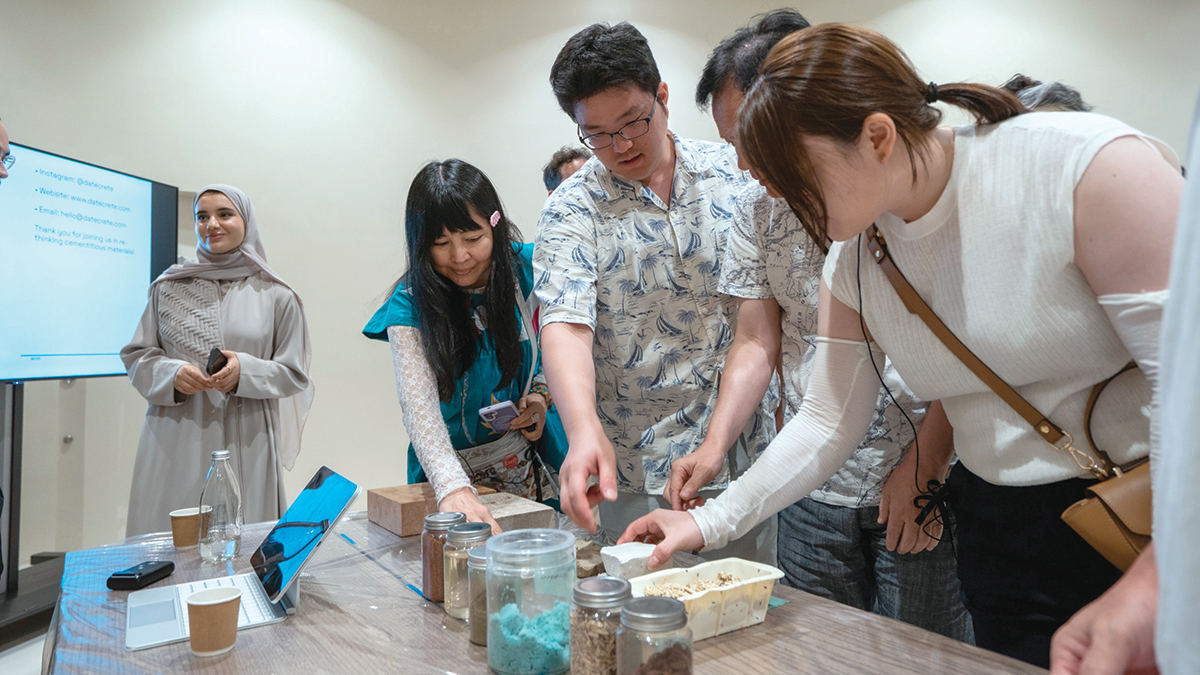
The UAE’s commitment extended beyond cultural expression, showcasing innovative approaches to sustainability. Sara Abufarha and Khaled Shalha focused on sustainable construction, presenting “Detecrete,” a groundbreaking cement-free alternative made from ground date palm cores. This material, currently awaiting patent approval, offers a promising solution to reduce the carbon footprint of the construction industry. The workshop also sparked discussions surrounding historical building materials, comparing ancient techniques like Middle Eastern mud plasters with traditional Japanese lime plaster (Shikkui). The goal was to demonstrate how traditional knowledge could inspire modern, environmentally conscious solutions. These initiatives underscored the importance of responsible material choices and highlighted the potential for collaboration between seemingly disparate fields like construction and agriculture.
الشباب الإماراتي: سفراء المستقبل والقوة الناعمة (Emirati Youth: Ambassadors of the Future and Soft Power)
The success of the UAE pavilion at Expo 2025 Osaka wasn’t simply about showcasing attractions; it was about the individuals who brought it to life. The الشباب الإماراتي (Emirati youth) exhibited a remarkable blend of cultural pride, artistic talent, and innovative thinking. Their ability to connect with visitors on a personal level, explain complex concepts with clarity, and represent their country with grace contributed significantly to the positive impression left on the international community. As Khaled Shalha eloquently stated, sustainability isn’t merely about compliance, but a profound connection to storytelling and long-term vision. This demonstrates how seamlessly these young ambassadors integrated the UAE’s core values into their presentations. The exchange of ideas and experiences at Expo not only benefited the attendees but also fostered a sense of global citizenship among the participating الشباب الإماراتي. Ultimately, their efforts serve as a powerful example of the UAE’s soft power – its ability to influence and attract through culture, values, and innovation. The increased visibility across platforms and media also boosted cultural tourism awareness – a further benefit for the UAE’s future.