







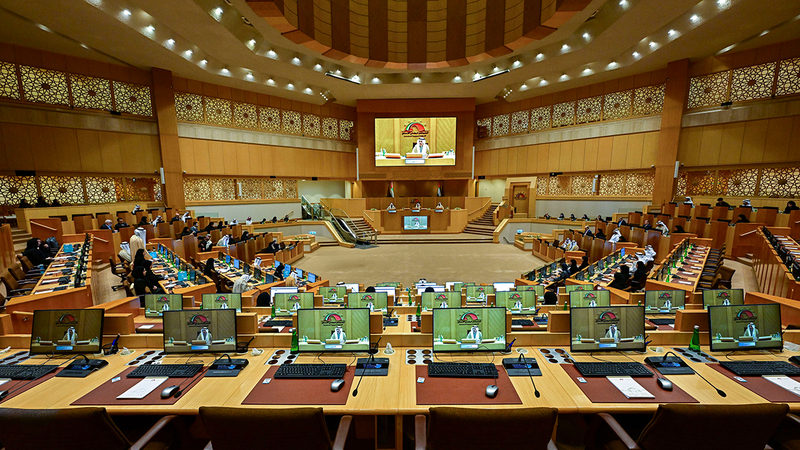
The United Arab Emirates places immense importance on the family unit, recognizing it as the cornerstone of society. Recent discussions within the Federal National Council (FNC) underscore a national commitment to strengthening and protecting families, particularly in light of evolving social dynamics. These deliberations, held under the presidency of Saqr Ghobash and with the attendance of the Minister of Family, Sheikha Sana bint Mohammed Suhail, focused on “family protection” and its vital role in the UAE’s future. This article delves into the key recommendations and discussions stemming from the FNC session, highlighting the UAE’s proactive approach to ensuring the well-being of its citizens.
The Year of the Family and National Priorities
The FNC session was initiated with a powerful statement from Saqr Ghobash, emphasizing that the declaration of 2026 as the “Year of the Family” by President Sheikh Mohamed bin Zayed Al Nahyan is a profoundly inspiring national message. This designation elevates the family to the forefront of national priorities, acknowledging its fundamental role as the primary incubator of values, identity, and social cohesion. Ghobash stressed the FNC’s commitment as a strategic partner to the government in realizing this vision, framing the session’s discussions as a crucial step towards formulating actionable recommendations. The focus on family stability is paramount to the UAE’s long-term success.
Key Recommendations for Enhanced Family Protection
Following extensive discussions encompassing challenges to family formation, threats to family security, and the impact of societal changes, the FNC formulated a series of significant recommendations. These proposals were subsequently referred to the Committee on Social Affairs, Labor, Population, and Human Resources for refinement based on member input.
Financial Support and Security
A central theme revolved around bolstering financial security for families, particularly those facing hardship. The Council recommended amending the executive regulations of Federal Decree-Law No. 23 of 2024 concerning social support and empowerment, to automatically provide a “federal consolation allowance” to widows within 10 days of notification of death. Furthermore, a call was made for a ministerial decree establishing a “National System for Immediate Electronic Death Notification,” outlining the responsibilities of participating entities and electronic connectivity mechanisms. Crucially, the Council proposed the creation of a “National Fund for Alimony” to guarantee the timely and continuous payment of court-ordered alimony, even in cases where the husband is unable to fulfill his obligations, with provisions for legal recourse.
Empowering Women and Supporting Single Mothers
Recognizing the evolving role of women in the UAE, the Council addressed the need to balance career aspirations with family responsibilities. Recommendations included allowing female government employees the option of early retirement and providing financial incentives and monthly allowances for non-working mothers. The establishment of a comprehensive federal platform, dubbed “The Leading Widow,” dedicated to empowering widows and enhancing their role in building families and communities, was also proposed. This platform would aim to provide resources and support for economic independence and social integration. The discussion also touched upon the importance of women’s empowerment as a key component of family well-being.
Addressing Domestic Violence
Protecting families from domestic violence was another critical area of focus. The Council advocated for amendments to Federal Decree-Law No. 13 of 2024 concerning protection from domestic violence, mandating psychological and behavioral assessments before any reconciliation is attempted. It also proposed prohibiting reconciliation in cases of repeated abuse or when the victim is a child, a person of determination, pregnant, or elderly. Strengthening awareness programs on domestic violence and its prevention, along with a comprehensive review of the Family Protection Guide, were also recommended.
Reconciling Work-Life Balance
Members of the Council raised concerns about the relationship between the labor market and family cohesion. They proposed enabling flexible work arrangements and remote work options for employees, particularly mothers with young children or those caring for elderly relatives or people of determination. Furthermore, they called for a review of the minimum wage and salary scales within the federal government to align with the rising cost of living, acknowledging the impact on young people delaying marriage due to financial constraints.
Recognizing the Role of Men and Family Counseling
A noteworthy point raised during the session was the need to extend family empowerment programs to include men. Council member Mona Hamad argued that current initiatives often focus solely on women, neglecting the vital role of the father as the head of the household and the primary provider. She emphasized that empowering the family necessitates empowering both parents.
The Council also discussed the importance of family counseling and recommended transferring the responsibility for family reform and guidance centers from the courts to the Ministry of Family. This shift aims to foster a more integrated and preventative approach to addressing family issues, with a focus on specialized academic qualifications and professional accreditation for family counselors. Investing in qualified professionals is crucial for effective family counseling.
The Path Forward: Implementation and Collaboration
Minister of Family, Sheikha Sana bint Mohammed Suhail, affirmed the government’s commitment to addressing the issues raised by the FNC. She acknowledged the importance of tackling the rising cost of living and highlighted existing initiatives aimed at empowering families in all aspects. She also emphasized the need for coordinated efforts with relevant authorities to implement the recommendations effectively. The success of these initiatives hinges on strong collaboration between government entities, civil society organizations, and the community as a whole.
The FNC’s deliberations on family protection represent a significant step towards strengthening the social fabric of the UAE. By addressing financial security, promoting gender equality, combating domestic violence, and fostering a supportive environment for families, the UAE is investing in its future and ensuring the well-being of its citizens. The ongoing commitment to refining and implementing these recommendations will undoubtedly contribute to a more resilient and thriving society.


