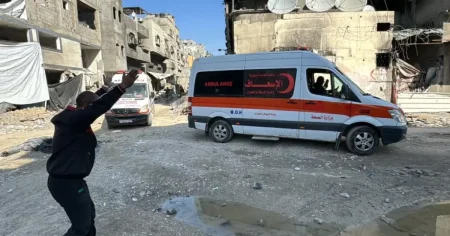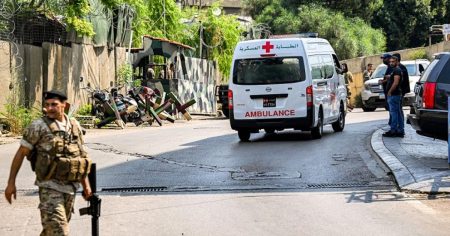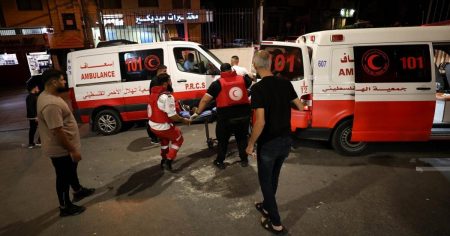




The situation in Gaza has evolved beyond a temporary military conflict, becoming a tool in a long-standing Israeli political project. This project aims to sever the connection between the Gaza Strip and the West Bank, transforming the Palestinian issue from one of national liberation into a series of manageable humanitarian and security concerns. The current war hasn’t created this project, but it has provided the most brutal and clear opportunity yet to accelerate its implementation. Discussions surrounding “the day after” and “reconstruction” often mask an underlying agenda of reshaping Gazan society, dismantling its national identity, and eliminating its historical role as a cornerstone of Palestinian nationalism – all under the guise of “preventing a return to violence.” This isn’t a search for a solution; it’s an attempt to solidify a permanent reality of fragmentation.
مشروع الفصل: إسرائيل تسعى لتصفية القضية الفلسطينية (The Separation Project: Israel Seeks to Resolve the Palestinian Issue)
The real danger isn’t the specifics of the proposals circulating about Gaza, but the political logic behind them. Treating Gaza as a separate issue from the West Bank, even if framed with humanitarian or security rhetoric, perfectly aligns with the Israeli vision of achieving a final settlement by separation. Within this framework, the war serves not only as a means of deterrence but as a tool to redraw the political and geographical landscape. Any plan to govern, rebuild, or “stabilize” Gaza outside the context of a unified Palestinian land and identity opens the door to cementing this separation as a fait accompli, reducing the occupation from a legal-political issue into an administrative matter. This situation, detrimental to Palestinian aspirations, necessitates a unified stance against فصل غزة عن الضفة الغربية (separating Gaza from the West Bank).
الوحدة الوطنية: خط الدفاع الأول ضد التصفية (National Unity: The First Line of Defense Against Liquidation)
Thwarting this project requires a fundamental rebuilding of Palestinian national unity. This unity cannot be based on a power-sharing arrangement that leaves institutions weak, or a softened version of the existing division. Instead, it must be a clear, transitional consensus built on a unifying political program. This isn’t simply about reconciliation between two factions; it’s about reaffirming the concept of one people, one land, and unified national representation achieved through consensus and ultimately, democratic elections.
This new framework should rest on three core elements:
توحيد غزة والضفة سياسيًا وقانونيًا (Political and Legal Unification of Gaza and the West Bank)
A unified political and legal structure is paramount. Separate administrations only serve to weaken the Palestinian cause and reinforce the Israeli agenda.
برنامج وطني واضح المعالم (A Clear National Program)
A defined national program must prioritize a fully sovereign Palestinian state with Jerusalem as its capital, based on the 1967 borders, as a realistic and achievable initial goal.
تفعيل منظمة التحرير الفلسطينية (Reactivating the Palestine Liberation Organization)
The PLO must be revitalized as the inclusive representative framework, reformed and modernized on national and democratic principles.
Continued division, or acceptance of managing it, isn’t neutrality; it actively paves the way for externally imposed solutions that reduce the Palestinian issue to a humanitarian crisis in Gaza and a security concern in the West Bank. The concept of الوحدة الوطنية الفلسطينية (Palestinian national unity) is not merely a moral imperative, but a crucial political necessity.
لا أوهام حول التحولات الداخلية في إسرائيل (No Illusions About Internal Transformations in Israel)
The war has unequivocally demonstrated that Israeli society isn’t undergoing a moral or political reassessment, but rather a descent into further extremism and denial. Even Israeli voices still advocating for a two-state solution are increasingly marginalized, lacking influence, and constrained by fear of public backlash.
Betting on a swift “awakening” within Israel is unrealistic. Any potential shifts will likely stem from mounting external pressure that alters the cost-benefit analysis and redefines the boundaries of political acceptability, not from persuasive dialogue or moral appeals.
المجتمع الدولي أمام مسؤولية تاريخية (The International Community Faces a Historical Responsibility)
The United States and Europe are now facing a critical political and ethical test. Treating Gaza as an isolated humanitarian crisis and the West Bank as a manageable security file hasn’t brought stability in the past, and won’t in the future. Security cannot be built on the denial of national rights, or on managing the conflict instead of resolving it.
What’s needed internationally isn’t balanced statements, but clear positions: rejecting any separation of Gaza from the West Bank, linking reconstruction to a genuine political process that ends the occupation – not dismantles Gazan society, supporting unified Palestinian representation instead of circumventing it, activating accountability mechanisms under international law, and moving beyond considerations of power alone. The international community must address the root causes of the conflict, including the ongoing الاحتلال الإسرائيلي (Israeli occupation).
التضامن الدولي: من التعاطف إلى الفعل المؤثر (International Solidarity: From Empathy to Effective Action)
The war has triggered a significant shift in global public opinion, particularly in the West, where the dominance of the Israeli narrative has been challenged by a new legal and ethical discourse concerning genocide and colonial settlement. However, this shift, however important, will remain limited without being channeled into a clear Palestinian political vision.
Popular movements alone don’t change policies, but they can raise the cost of perpetuating injustice by translating into institutional pressure within parliaments, universities, trade unions, markets, and courts. Solidarity becomes a real force only when linked to a clear political objective.
خريطة طريق نحو المستقبل (A Roadmap for the Future)
Palestinians need a realistic political plan based on: a permanent and absolute rejection of separating Gaza from the West Bank; a transitional national unity government with a defined program and inclusive mechanisms, agreed upon at the PLO level and within the Palestinian Authority; internationalizing the issue legally, not just humanitarily; forging a strategic partnership with global popular movements; and redefining resistance as a comprehensive national path – political, legal, popular, and long-term – with its strength rooted in national consensus on its forms and the broad engagement of the Palestinian people.
When elites fail, rights do not. When politics are besieged, will does not vanish.
Preventing the separation project isn’t the responsibility of one faction or leader, but a collective national duty. Palestine isn’t confined to Gaza or the West Bank; it resides in the unity of its land and people, and in the inalienable right to self-determination. This isn’t a call for confrontation, but a plea for political reason, in Palestine and around the world: there can be no stability without justice, no peace without ending the occupation, and no future without unified national decision-making.
جميع المقالات تعبر عن وجهة نظر أصحابها وليس عن وجهة نظر وكالة سوا الإخبارية. (All articles express the viewpoint of their authors and not that of the Sawa News Agency.)