


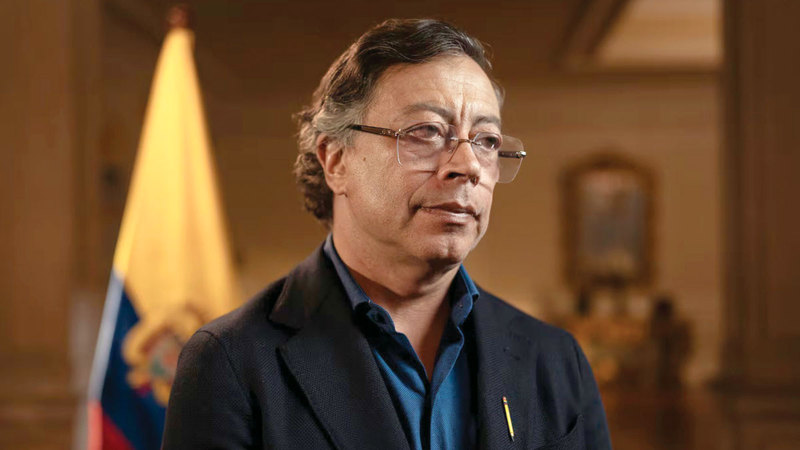
The recent statements by Colombian President Gustavo Petro regarding potential US military intervention have sparked significant debate and concern across Latin America. Petro revealed in a recent interview that he feared a scenario mirroring that of Venezuelan President Nicolás Maduro, believing Colombia could be facing imminent attack. This article delves into the details of his claims, the conversation with former US President Donald Trump, and the wider implications for regional stability. We will explore the context of these fears, the diplomatic efforts undertaken, and the current assessment of the تهديد عسكري (military threat).
مخاوف الرئيس بيترو من تدخل أمريكي
During an interview with the Spanish newspaper El País, President Petro shockingly shared that he operated under the belief for a week that Colombia was poised to be the target of a US military action. This fear wasn’t born in a vacuum; it stemmed from a perceived pattern of interventionist behaviors towards Latin American nations resisting what Petro considers external pressures. He directly linked his anxieties to the situation faced by Nicolás Maduro in Venezuela, suggesting both leaders could suffer a similar fate if they didn’t align with specific, unnamed “interests.”
Petro emphasized that this threat isn’t limited to individual presidents but is a systemic risk facing any leader unwilling to compromise perceived national sovereignty. This sentiment highlights a growing concern amongst some Latin American leaders regarding undue influence from external powers, particularly the United States. Consequently, he felt compelled to prepare for the possibility, despite Colombia’s limited defensive capabilities.
محادثة هاتفية مع الرئيس ترامب
The core of Petro’s revelation centres around a direct phone call with former US President Donald Trump. The conversation, lasting approximately an hour, proved crucial in easing the immediate tension. Petro described Trump as a pragmatic leader who responds to perceived advantages. While acknowledging deep ideological differences, he noted a surprising common ground regarding the issue of drug trafficking.
“Trump told me he was considering bad things for Colombia,” Petro said, interpreting this as signalling concrete plans for potential military intervention. He presented a detailed account of the situation in Colombia, particularly concerning the fight against narcotics, believing Trump relied heavily on information provided by the Colombian opposition and figures based in Florida. Petro argued that this information was fundamentally inaccurate and contradictory to the actions taken by his administration to combat drug cartels, referencing the stance of previous Colombian President Álvaro Uribe.
تفاصيل الاتفاق بين الجانبين
The discussion allowed Petro to clearly articulate his position. He believes that the prolonged explanation – approximately 40 minutes – finally shifted Trump’s understanding of the complex situation in Colombia. While Trump dedicated only 15 minutes to outlining potential communication channels, the overall effect, according to Petro, was a “freeze” on the immediate threat of military action. Nevertheless, Petro admits the possibility that unrevealed preparations for intervention may still exist. This delicate situation emphasizes the importance of ongoing الدبلوماسية (diplomacy) and open communication.
الدفاع الشعبي ونقص القدرات الجوية
An intriguing aspect of Petro’s strategy was his reliance on what he termed “popular defense.” He openly discussed Colombia’s lack of advanced air defense systems – a deliberate choice rooted in the country’s primarily internal conflict. Given Colombia hadn’t faced threats from air forces equipped with sophisticated aircraft like the US F-16, investment in such technology wasn’t considered a priority.
This lack of conventional defenses meant that Colombia wouldn’t be able to actively counter a potential US air assault. Petro, therefore, chose to emphasize resistance within the populace, effectively suggesting a nation united against potential intervention would be a deterrent in itself. This approach, driven by necessity, underlines a unique perspective on national security and a belief in the power of collective action. The situation highlights the growing need for regional التعاون الأمني (security cooperation) to address potential threats effectively.
الوضع في فنزويلا ودور رودريغيز
Petro also touched upon the crisis in Venezuela, describing Vice President Delcy Rodríguez as a close friend bearing significant pressure internally and externally. He warned against the dangers of dividing the Venezuelan people, believing that unity and a political solution are crucial to avoid further “colonization.” He stressed the necessity of including all political forces in Venezuela, including those currently critical of the government, to prevent escalation and violence.
He further mentioned Rodríguez seeking his help with mediation between Venezuela and the US, but noted Trump deflected the offer. He suggested the conversation pivoted back to Trump focusing on channels and approaches rather than direct mediation.
الخلاصة والخطوات القادمة
President Petro’s statements paint a stark picture of perceived external pressures and the delicate nature of Colombia’s relationship with the United States. While the immediate تهديد عسكري appears to have been alleviated through direct communication with Donald Trump, the underlying concerns about sovereignty and intervention remain. The emphasis on “popular defense,” the lack of robust air defense systems, and the plea for regional unity all underscore a growing desire for independent policy-making and a more equitable relationship with global powers.
Moving forward, sustained dialogue, transparency, and a commitment to respecting national sovereignty are paramount. The international community must actively support peaceful resolutions to regional conflicts and prioritize collaboration over coercion. It’s essential that all parties involved continue to engage in constructive التفاوض (negotiation) to build trust and address the root causes of instability. The situation serves as a potent reminder of the fragility of peace and the importance of proactive diplomacy in a complex geopolitical landscape.