







The global shift towards sustainable energy sources is gaining momentum, and the recent International Forum on Sustainable Bioenergy, hosted in Dubai, underscored the United Arab Emirates’ commitment to leading this charge. Under the theme “From the Emirates / To a Green World,” the forum brought together policymakers, experts, academics, and industry leaders to discuss the future of الطاقة الحيوية المستدامة (sustainable bioenergy) and its crucial role in building a low-carbon circular economy. The event highlighted innovative solutions for biofuels, including sustainable aviation fuel (SAF), marine fuels, and renewable transport fuels, while also emphasizing the importance of nurturing young scientific talent in this vital field.
الإمارات في طليعة الاستدامة: رؤية 2050 والطاقة الحيوية
The UAE has firmly positioned sustainability as a cornerstone of its national agenda, setting an ambitious goal of achieving climate neutrality by 2050. This commitment is being realized through proactive initiatives aimed at reducing emissions, promoting clean energy projects, and lessening reliance on fossil fuels. As Engineer Saif Ghubash, Assistant Undersecretary for Petroleum, Gas and Mineral Wealth at the Ministry of Energy and Infrastructure, stated, الطاقة الحيوية المستدامة represents a significant pathway within the future energy mix.
The nation has already begun pioneering efforts, notably being among the first in the region to test flights utilizing SAF in collaboration with national airlines. This demonstrates a practical approach to implementing sustainable solutions within a critical sector like aviation. Furthermore, initiatives like the “UAE Energy Strategy 2050,” circular economy programs, and carbon removal projects are accelerating the transition towards a greener future.
أهمية الشراكات بين القطاعين العام والخاص
A key takeaway from the forum was the critical importance of fostering strong partnerships between universities and the private sector. These collaborations are essential for driving innovation and developing the technologies needed to support a low-carbon economy. By combining academic research with industry expertise, the UAE can accelerate the development and deployment of sustainable bioenergy solutions. This synergy will not only benefit the nation but also serve as a model for other countries seeking to embrace a more sustainable energy future.
تعزيز البحث العلمي ودعم العلماء الشباب
The forum wasn’t solely focused on established players; a significant emphasis was placed on cultivating the next generation of scientists and researchers. The Arab Universities Union and the Youssef Bin Saeed Lootah Young Scientist Award played a pivotal role in this aspect, aiming to invest in Arab capabilities and encourage innovation.
Dr. Amr Ezat Salama, Secretary-General of the Arab Universities Union, emphasized that the initiative strengthens investment in Arab competencies and talents, encouraging young scientists to innovate and contribute to sustainable development in the UAE and the Arab world. The Youssef Bin Saeed Lootah Young Scientist Award specifically aims to bridge the gap between academic institutions and industry across the Arab region, supporting sustainable solutions in green chemistry, renewable energy, and the circular economy. This focus on nurturing talent is crucial for long-term success in the field of الطاقة الحيوية المستدامة.
مناقشات عالمية حول مستقبل الوقود الحيوي
The forum featured two working sessions with a distinguished panel of international experts. The first session included Dr. Jennifer Holmgren, CEO of LanzaTech (USA), Professor Robert Spišák, Chairman of the Board of Infin Group (Slovakia), and Engineer Maryam Al Matroushi, Chairperson of the Committee on Environmental Protection at the International Civil Aviation Organization (ICAO). The discussion centered on the latest advancements in biofuel technology and the challenges of scaling up production.
The second session showcased insights from Julian Thiel, CEO of Deccel (Switzerland), Shiji Wang, General Manager of Bynew Group (China), and Shin Ito from JGC (Japan). This session explored international collaborations and the role of technology transfer in accelerating the adoption of الطاقة الحيوية المستدامة globally. The diverse perspectives shared during these sessions highlighted the global nature of the energy transition and the need for collective action.
التركيز على وقود الطيران المستدام والوقود البحري
A particularly prominent theme throughout the forum was the potential of sustainable aviation fuel (SAF) and low-carbon marine fuels. These sectors are notoriously difficult to decarbonize, and biofuels offer a promising pathway to reducing their environmental impact. The UAE’s early adoption of SAF testing demonstrates its proactive approach to addressing these challenges. The discussions also explored the potential of utilizing waste streams and biomass resources to produce these fuels, further contributing to a circular economy. The development of these alternative fuels is vital for achieving global climate goals and ensuring a sustainable future for the transportation industry.
تكريم المبتكرين وتأكيد الالتزام بالمستقبل الأخضر
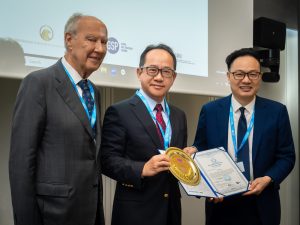
The forum culminated in an awards ceremony recognizing the winners of the Youssef Bin Saeed Lootah Young Scientist Award in the three categories: Green Chemistry, Renewable Energy, and Circular Economy. This recognition served as a powerful motivator for young scientists and underscored the importance of their contributions to the field.
Participants expressed their gratitude to the Ministry of Energy and Infrastructure, the Arab Universities Union, and the Youssef Bin Saeed Lootah Award for organizing this impactful event. They reaffirmed their commitment to supporting scientific innovation and الطاقة الحيوية المستدامة, and to forging new pathways towards a greener and more prosperous future for all. The Dubai forum served as a crucial platform for collaboration and knowledge sharing, solidifying the UAE’s position as a global leader in the pursuit of sustainable energy solutions.


