


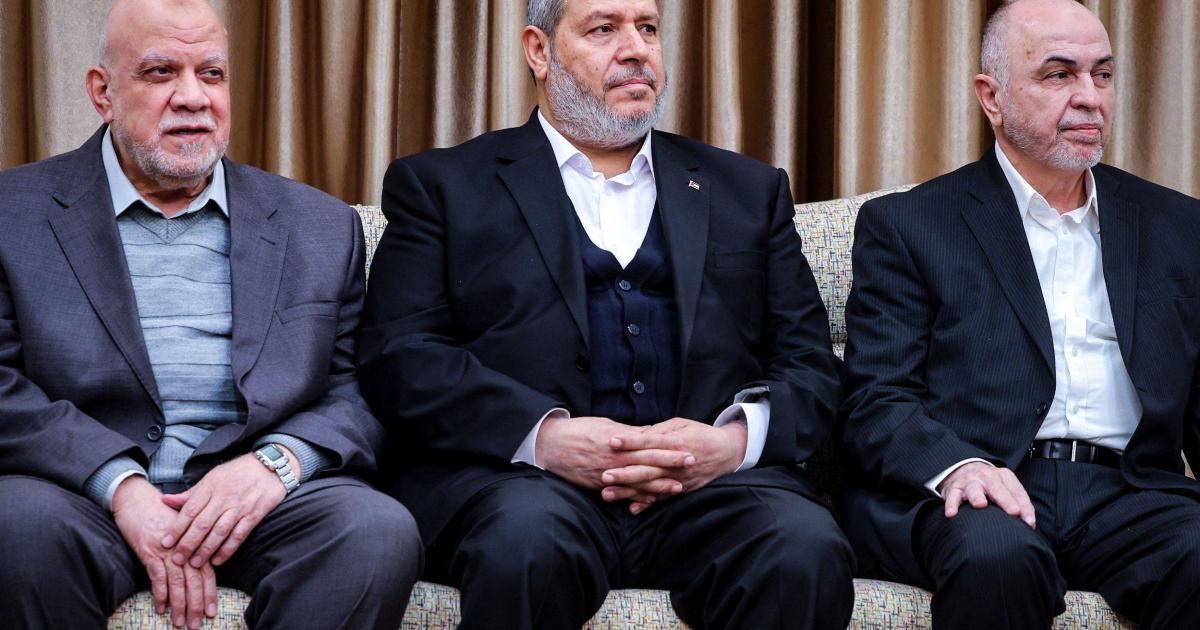
The aftermath of the recent conflict has prompted significant internal debate within Hamas regarding its future political direction. Sources within the movement reveal discussions about a potential shift in strategy, acknowledging the new realities imposed by the prolonged Israeli military operations following the October 7th attack. This article delves into the details of these internal deliberations, exploring the possibility of Hamas evolving from a primarily military organization into a political party, and the implications of such a transformation for the Palestinian cause.
مستقبل حركة حماس السياسي: تحول نحو المشاركة السياسية؟ (The Political Future of Hamas: A Shift Towards Political Participation?)
Recent reports indicate a serious internal discussion within Hamas concerning its long-term viability in the wake of the devastating war in Gaza. According to sources speaking to Al-Sharq Al-Awsat, key figures both inside and outside the Gaza Strip are considering a fundamental change in the movement’s approach. The core of this debate revolves around the potential for Hamas to establish itself as a conventional political party, similar to other Islamist and nationalist groups operating in the region. This would involve actively participating in the political, economic, and social spheres, a significant departure from its historical focus on armed resistance. The discussions highlight a pragmatic assessment of the current situation and a desire to ensure the movement’s survival.
المصالحة الفلسطينية والمشاركة في منظمة التحرير (Palestinian Reconciliation and Participation in the PLO)
A central tenet of the proposed shift involves a comprehensive Palestinian reconciliation. The internal document reportedly advocates for a unified Palestinian front that safeguards the interests of all factions, including Hamas. Crucially, this includes exploring the possibility of joining the Palestine Liberation Organization (PLO), with a view towards reforming and restructuring the organization.
The aim is to create a more inclusive and representative political system, capable of engaging effectively with Arab and Islamic nations, as well as the international community. This would involve opening channels of communication with various stakeholders and positioning Hamas as a key political actor, potentially lessening its reliance on armed struggle. The sources emphasize that this isn’t about abandoning the Palestinian cause, but about adapting to the changing landscape to better serve it.
التوازن بين السلاح والعمل السياسي: تحديات وفرص (Balancing Armed Struggle and Political Action: Challenges and Opportunities)
The question of whether this proposed political transformation necessitates relinquishing Hamas’s armed wing is a complex one. Sources indicate that the discussion isn’t primarily driven by a willingness to disarm, but rather by a recognition of the need to adapt to the evolving political dynamics in the region. The failure of Israel’s military campaign to eliminate Hamas has led to a reassessment of strategies.
One leader involved in the proposal, speaking from outside Gaza, clarified that the initiative emerged after a period of relative political stability following the ceasefire. He stressed that the focus is on ensuring Hamas’s continued existence as a Palestinian movement, and that political maneuvering can be a powerful tool in achieving this goal. The issue of the armed wing is currently being discussed with mediators like Egypt, Qatar, and Turkey, and even indirectly with the United States. However, any agreement on disarmament would need to be part of a broader Palestinian national consensus, and not imposed by external forces.
اتفاق وطني بشأن سلاح المقاومة (A National Agreement on the Weapon of Resistance)
The sources are adamant that any decision regarding the future of Hamas’s military capabilities must be made through a national Palestinian agreement. They reject the idea of international intervention, particularly the enforcement of disarmament by a foreign power, fearing it could lead to chaos and instability. The movement seeks a consensus-based approach to the issue, aligning with the terms of the ceasefire agreement and reflecting the will of the Palestinian people.
تحول تدريجي في الاستراتيجية (A Gradual Shift in Strategy)
The proposed transformation isn’t envisioned as an abrupt change, but rather as a gradual transition towards greater political engagement. This approach aims to preserve Palestinian rights and principles amidst the shifting realities of the region. The current situation, following the end of the Gaza war, demands a flexible and adaptable strategy.
Some voices within Hamas argue that relying solely on military means is no longer sustainable. They point to the significant loss of popular support during the war and emphasize the need for a more balanced approach that combines resistance with political action. The sources highlight the importance of recognizing the evolving dynamics, where peace is increasingly linked to development and reconstruction, as outlined in the ceasefire agreement.
المخاوف من مشاريع الفصل السياسي (Concerns Regarding Political Separation Projects)
A significant concern driving this internal debate is the potential for attempts to separate Gaza from the West Bank and Jerusalem. The sources point to recent US proposals, particularly a draft resolution presented to the UN Security Council, as evidence of this dangerous trend. They believe these initiatives threaten the entire Palestinian cause and underscore the urgency of a unified political strategy.
Hamas is facing increasing pressure, even from its supporters, to disarm and relinquish control of Gaza, paving the way for a comprehensive political settlement with Israel. However, the movement’s leadership and affiliated factions remain wary of a prolonged and open-ended conflict. They are actively seeking a long-term truce, hoping to achieve this through the current agreement, despite acknowledging that a more favorable outcome was desired. The future of حماس hinges on navigating these complex challenges and forging a path that ensures its survival and the realization of Palestinian aspirations. The internal discussions surrounding التحول السياسي are a critical step in this process, and the outcome will undoubtedly have far-reaching consequences for the region. Understanding the nuances of this الوضع السياسي is crucial for anyone seeking to comprehend the future of the Israeli-Palestinian conflict.