



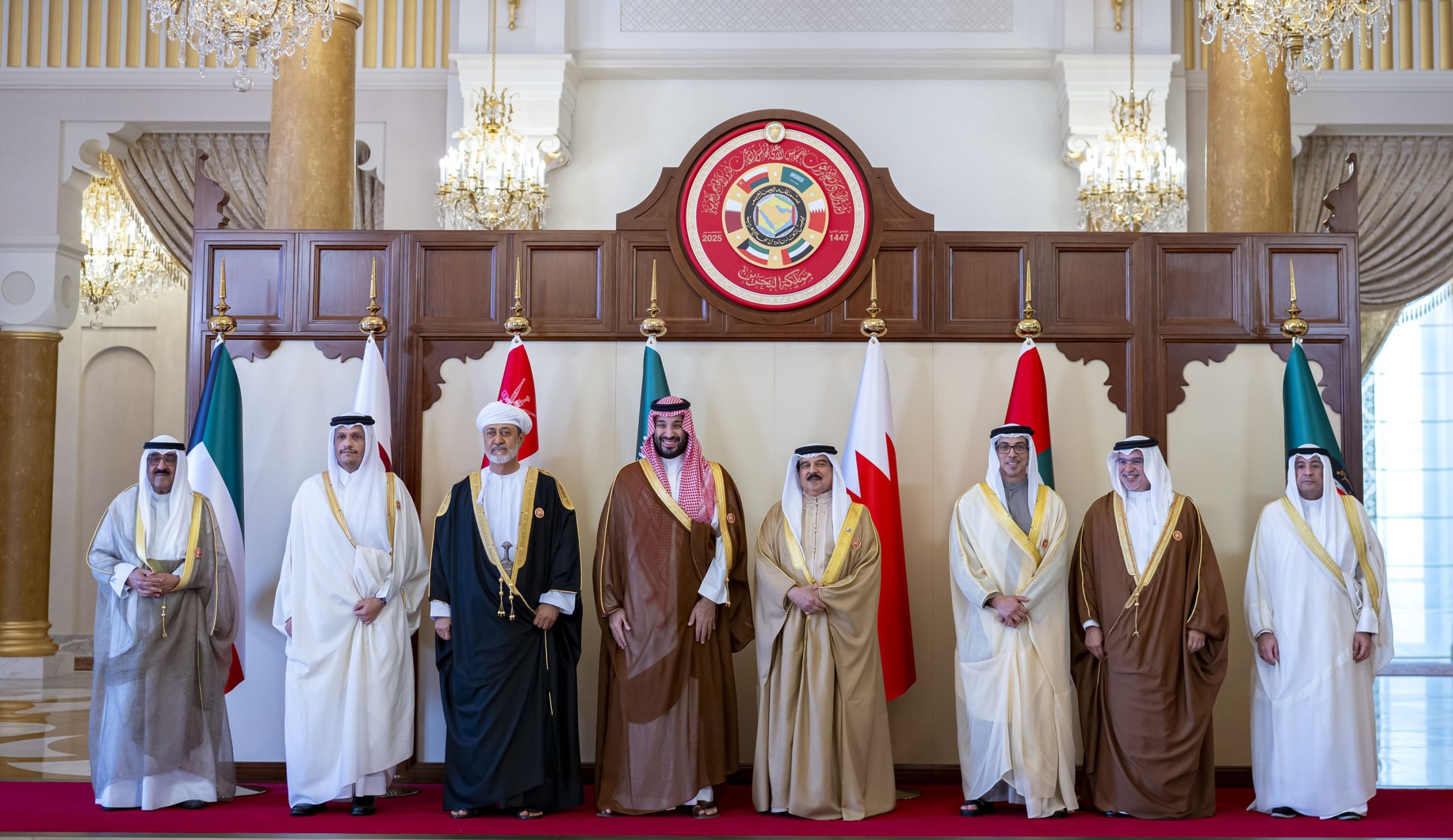
In an era defined by regional complexities and global shifts, the Gulf Cooperation Council (GCC) remains a pivotal force for stability and progress in the Middle East. The recently concluded 46th session of the GCC Supreme Council, held in the Kingdom of Bahrain, culminated in the issuance of the “Al-Sakhir Declaration,” a comprehensive document outlining the bloc’s priorities and vision for the future. This declaration reaffirms the commitment of GCC member states to unity, security, and prosperity, addressing crucial issues ranging from regional conflicts to economic integration and environmental responsibility. Understanding this إعلان الصخير (Al-Sakhir Declaration) is vital for anyone following developments in the Gulf region.
Reinforcing GCC Bonds: A Foundation of Shared Identity
The Al-Sakhir Declaration emphasizes the deep-rooted fraternal ties binding the GCC nations – Bahrain, Kuwait, Oman, Qatar, Saudi Arabia, and the United Arab Emirates. This kinship stems from a shared heritage of religion, lineage, language, and a collective destiny. The leaders reaffirmed their adherence to the core principles upon which the Council was established in 1981. This commitment translates into a firm resolve to strengthen cooperation and integration across all spheres: political, security, economic, and social. The ultimate aim, as stated in the declaration, is the realization of the sought-after unity that serves the common interests of the GCC nations and contributes to regional and global peace.
Security and Sovereignty: Cornerstones of GCC Policy
A central tenet of the إعلان الصخير (Al-Sakhir Declaration) is an unequivocal respect for the sovereignty of GCC member states and their neighbors. The declaration unequivocally rejects any form of interference in internal affairs and condemns the use or threat of force. It underscores the indivisible nature of GCC security, stressing that any infringement on the sovereignty of one member state constitutes a direct threat to the collective security of the entire bloc.
The declaration also highlights the importance of a robust and cohesive defense and security system within the GCC framework. This reflects a proactive approach to safeguarding the region from external threats and maintaining stability. Furthermore, it affirms the GCC’s commitment to peaceful conflict resolution, welcoming efforts toward a just and comprehensive peace in the Middle East.
Supporting Peace in Gaza and a Palestinian State
Demonstrating a firm stance on the Palestinian issue, the Al-Sakhir Declaration welcomed the outcomes of the Sharm el-Sheikh summit aimed at achieving peace. It explicitly voiced support for regional and international efforts dedicated to full compliance with the terms of the ceasefire agreement in the Gaza Strip. Ensuring the uninterrupted delivery of humanitarian aid and facilitating reconstruction were also highlighted as crucial priorities.
Importantly, the declaration reiterated unwavering support for the establishment of an independent and sovereign Palestinian state based on the 1967 borders, with East Jerusalem as its capital, in accordance with the two-state solution, the Arab Peace Initiative, and relevant UN resolutions. The GCC leaders underscored the need to fulfill the legitimate aspirations of the Palestinian people for a life of security and dignity. This shows their continued commitment to the القضية الفلسطينية (Palestinian Cause).
Economic Integration and Sustainable Development
The إعلان الصخير (Al-Sakhir Declaration) places significant emphasis on driving economic development and technological advancement within the GCC. Leaders affirmed their commitment to completing the requirements for the common Gulf market and customs union, aiming to boost trade, tourism, and investment. Special attention was given to strategic projects in infrastructure, transportation, energy, telecommunications, water, and food security.
The declaration promoted the integration of digital infrastructure, facilitating e-commerce, and supporting the development of shared digital payment systems and cloud services. These efforts aim to achieve complete economic citizenship and support sustainable, inclusive growth. Diversification of national economies and the promotion of innovation and sustainability were also deemed essential for long-term prosperity. The emphasis on التنمية الاقتصادية (Economic Development) is a key theme throughout the document.
Environmental Responsibility and International Cooperation
Recognizing the urgency of environmental challenges, the Al-Sakhir Declaration reaffirms the GCC’s commitment to responsible environmental practices and sustainable initiatives. This includes pursuing strategies to combat climate change, reduce carbon emissions, and promote clean and renewable energy sources. Conservation of natural and marine resources is also prioritized, aligned with both regional and global initiatives such as achieving net-zero emissions and fulfilling the Sustainable Development Goals.
Finally, the declaration highlights the importance of international cooperation in maintaining regional security and fostering partnerships with friendly nations and international organizations. The GCC leaders voiced their support for Bahrain’s representation of the Arab group in the United Nations Security Council, expressing confidence in its ability to promote the Council’s objectives and Arab interests.
In conclusion, the إعلان الصخير (Al-Sakhir Declaration) represents a powerful affirmation of GCC unity and a clear roadmap for addressing the critical challenges and opportunities facing the region. The declaration’s focus on security, economic integration, sustainable development, and international cooperation underscores the GCC’s commitment to a stable, prosperous, and peaceful future for its member states and the wider Middle East. It serves as a crucial document for understanding the direction of GCC policy and its role in shaping regional and global affairs. Analyzing the implications of this declaration will be crucial for policymakers, analysts, and anyone invested in the future of the Gulf region.