








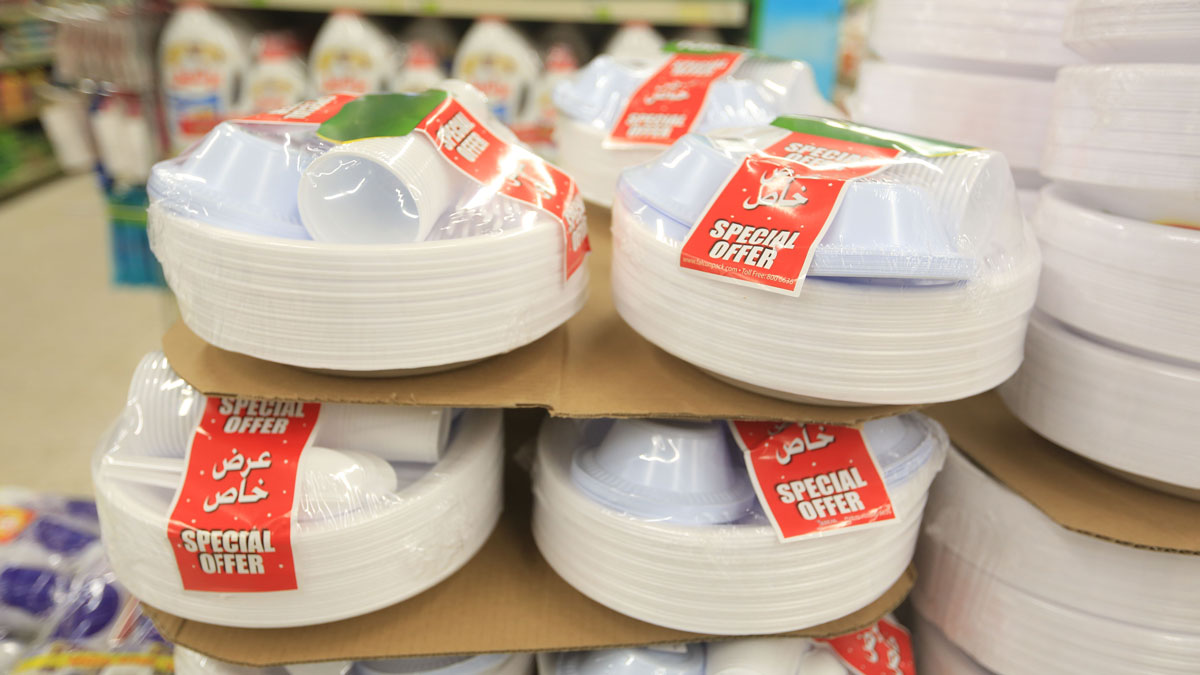
The United Arab Emirates continues to demonstrate its commitment to environmental sustainability with the ongoing implementation of regulations aimed at reducing plastic waste. Recent observations by Al Emarat Al Youm newspaper reveal that some retail outlets, supermarkets, and grocery stores are still offering single-use plastic products, despite the scheduled enforcement of the second phase of Ministerial Decision No. (380) of 2022, beginning January 1st, 2026. This decision mandates a ban on the import, production, and distribution of these items, highlighting a challenge in full compliance with the new plastic ban regulations.
المرحلة الثانية من حظر البلاستيك: الوضع الحالي والتحديات (Second Phase of the Plastic Ban: Current Situation and Challenges)
The second phase of the ban specifically targets a range of single-use plastic items, including beverage cups and lids, plastic cutlery (spoons, forks, knives, and chopsticks), plates, straws, stirrers, and food containers made of polystyrene (foam). Crucially, the ban extends to all single-use bags, regardless of material, if their thickness is less than 50 microns. The Ministry of Climate Change and Environment (MoCCAE) has actively called upon businesses, markets, and suppliers to fully adhere to the decision and contribute to the UAE’s environmental goals. However, Al Emarat Al Youm’s inquiries with several retail outlets were met with silence, indicating a reluctance to publicly address the issue of ongoing non-compliance.
رصد حالات عدم الامتثال (Monitoring Non-Compliance)
MoCCAE has confirmed that it has identified instances of non-compliance among some retailers and establishments regarding the second phase of the plastic ban. The newspaper’s own monitoring corroborates this, showing continued availability of single-use plastic products, particularly plastic cutlery, in various stores. The Ministry acknowledges that some level of non-compliance is expected during the initial stages of implementing any new legislation on a large scale.
أبرز التحديات التي تواجه التنفيذ (Key Challenges Facing Implementation)
According to MoCCAE, the primary obstacles to full implementation stem from varying levels of preparedness among businesses and a continued need for greater awareness regarding the specific products covered by the ban, as well as those that are exempt. The presence of these prohibited items, even in limited quantities, doesn’t fall under the permitted exceptions but is categorized as non-compliance subject to inspection and regulatory action. This can be attributed to pre-existing stock or delayed adaptation by some businesses. The Ministry emphasizes that it is working closely with local authorities to address these situations.
آليات الرصد والمتابعة والرقابة (Monitoring, Follow-up, and Control Mechanisms)
MoCCAE employs a comprehensive system for monitoring, following up on, and controlling compliance with the plastic ban. This includes continuous coordination with local authorities responsible for inspection and enforcement, alongside the tracking of reports and complaints received from the public. Furthermore, the Ministry conducts awareness campaigns to support the legislation. MoCCAE also plays a role in evaluating the effectiveness of the ban and providing feedback to relevant authorities to ensure nationwide adherence.
The Ministry clarifies that local authorities are responsible for conducting field inspections and addressing violations through official channels, regular meetings, and information sharing. This collaborative approach aims to standardize understanding of the legislation and enhance the integration of roles across the different Emirates.
الإجراءات والجزاءات المترتبة على عدم الامتثال (Procedures and Penalties for Non-Compliance)
Penalties for non-compliance will be applied according to the existing laws and regulations of each Emirate’s local authorities. These penalties can range from warnings and financial fines to corrective measures, depending on the nature, severity, and recurrence of the violation. The goal is to deter non-compliance and ensure adherence to the regulations. MoCCAE and local authorities are actively issuing clarifications to markets and consumers, outlining the scope of the ban, the list of exempted products, and how to differentiate between them, ultimately aiming to increase awareness and promote compliance. The focus is on promoting sustainable alternatives to plastic.
تعاونية الاتحاد: مثال على الامتثال (Al Etihad Cooperative: An Example of Compliance)
Muhammad Al Hashimi, CEO of Al Etihad Cooperative, stated that the Ministerial Decision applies to everyone and that the cooperative is fully committed to it. He confirmed that the cooperative implemented the ban in its outlets upon its effective date and withdrew all products covered by the decision. Al Hashimi added that the cooperative had been preparing for the ban well in advance, collaborating with companies and suppliers to secure alternatives to the withdrawn products, ensuring their availability to consumers before the ban came into effect.
نحو مستقبل أكثر استدامة (Towards a More Sustainable Future)
The implementation of the second phase of the plastic ban is a crucial step in the UAE’s broader efforts to protect its natural ecosystems and reduce the environmental impact of waste. This initiative aligns with the nation’s vision for enhancing sustainability and improving quality of life. The exempted products, including those intended for export, those made from recycled materials, and specific medical and food preservation applications, demonstrate a balanced approach that considers both environmental protection and economic needs. The initial phase, which banned single-use plastic shopping bags in January 2024, laid the groundwork for this expanded effort. Continued collaboration between MoCCAE, local authorities, businesses, and consumers will be essential to ensure the long-term success of this important environmental initiative and the widespread adoption of eco-friendly products.


